
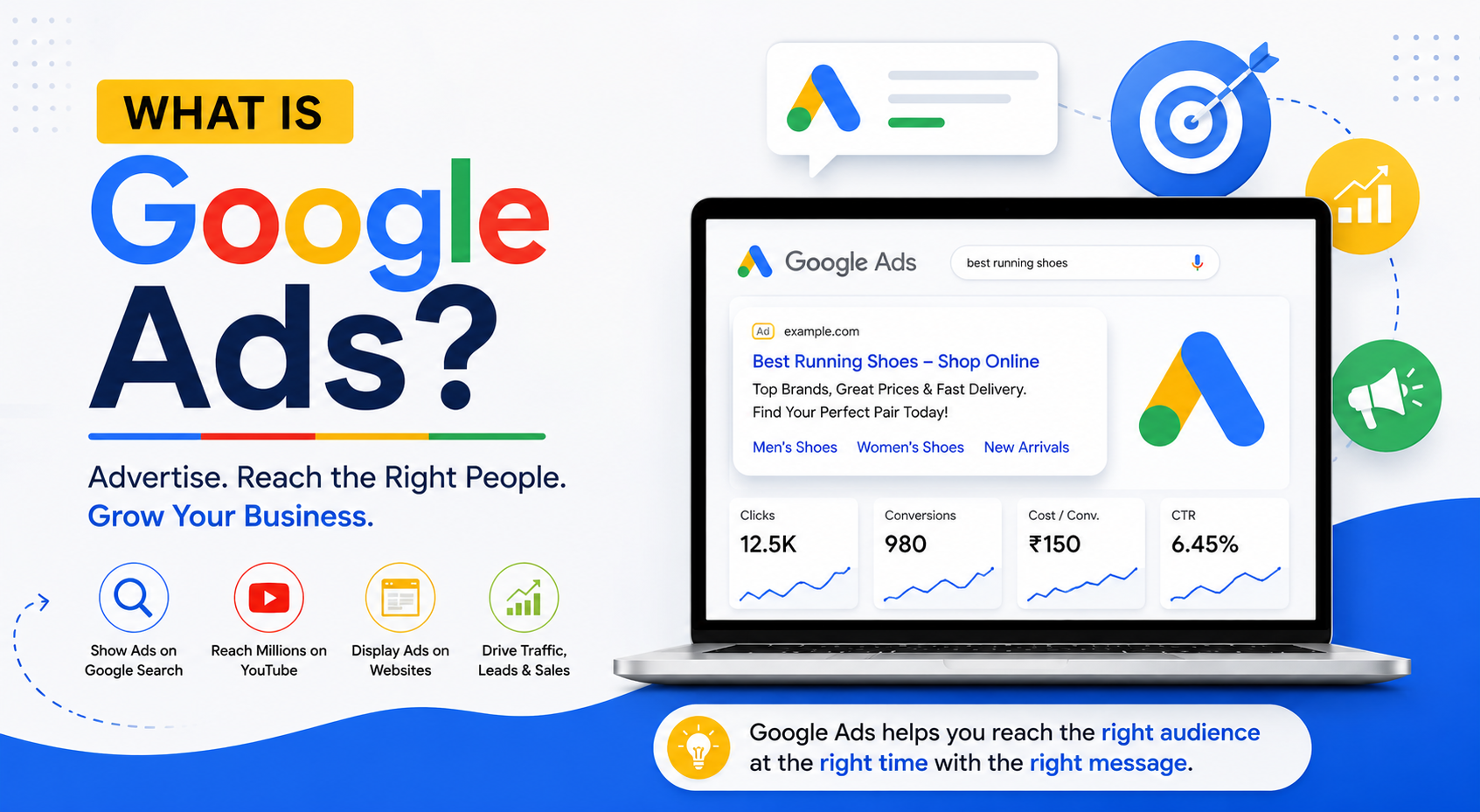
In today’s digital world, businesses are constantly looking for effective ways to reach their target audience and grow their customer base. One of the most powerful online advertising platforms available is Google Ads. Whether you’re a small business owner, a startup, or a large enterprise, Google Ads helps you connect with potential customers at the exact moment they are searching for your products or services.
If you’re new to online advertising, understanding how Google Ads works can seem overwhelming. However, once you learn the basics, you’ll discover why millions of businesses rely on this platform to drive traffic, generate leads, and increase sales.
In this guide, we’ll explain what Google Ads is, how it works, its key benefits, campaign types, pricing model, and best practices for running successful campaigns.
What Is Google Ads?
Google Ads is Google’s online advertising platform that allows businesses to display ads across Google Search, YouTube, Gmail, Google Maps, and millions of partner websites through the Google Display Network.
Advertisers bid on specific keywords related to their products or services. When users search for those keywords on Google, relevant ads may appear at the top or bottom of the search results page.
Unlike traditional advertising, helps businesses reach people who are already interested in their offerings, making it one of the most effective forms of digital marketing.
Why Google Ads Is Important for Businesses
Google processes billions of searches every day. Many of these searches come from users looking for products, services, or solutions to their problems.
- Reach customers instantly
- Increase website traffic
- Generate qualified leads
- Improve online visibility
- Promote products and services
- Increase sales and conversions
- Build brand awareness
Instead of waiting months for organic SEO results, businesses can start attracting visitors almost immediately after launching their campaigns.
How Google Ads Works
Google Ads operates on a pay-per-click (PPC) model. This means advertisers generally pay only when someone clicks on their ad.
Here’s a simple overview of the process:
- Choose campaign objectives.
- Select relevant keywords.
- Create compelling advertisements.
- Set a daily or monthly budget.
- Launch the campaign.
- Google matches your ads with relevant user searches.
- Pay only when someone interacts with your ad (depending on campaign type).
Google determines which ads appear based on factors such as:
- Bid amount
- Ad relevance
- Quality Score
- Expected click-through rate
- Landing page experience
This ensures users see ads that are useful and relevant.
Types of Google Ads Campaigns
Google Ads offers several campaign types to suit different marketing goals.
Search
Search Ads appear at the top of Google search results when users search for specific keywords.
These ads are ideal for:
- Service businesses
- Local businesses
- Online stores
- Lead generation
- High-intent customers
Display
Display Ads appear on millions of websites, blogs, and mobile apps that are part of the Google Display Network.
They are excellent for:
- Brand awareness
- Remarketing
- Product promotions
- Visual advertising
Shopping
Shopping Ads showcase products with images, prices, ratings, and store information.
They work best for eCommerce businesses selling physical products.
Video
Video Ads appear before, during, or after YouTube videos.
These campaigns help businesses:
- Increase brand awareness
- Reach large audiences
- Promote products visually
- Generate engagement
App Promotion
App Campaigns help businesses increase mobile app installs and engagement across Google Search, Play Store, YouTube, and Display Network.
Performance Max
Performance Max campaigns use artificial intelligence to show ads across all Google channels from a single campaign.
They optimize performance based on your campaign goals and audience behavior.
Benefits
offers numerous advantages for businesses of all sizes.
Delivers Instant Results
Unlike SEO, which takes time, begin driving traffic shortly after your campaign goes live.
Targets the Right Audience
You can target users based on:
- Keywords
- Location
- Language
- Age
- Gender
- Interests
- Device
- Time of day
This precision helps maximize your advertising budget.
Google Ads Gives Full Budget Control
Businesses can:
- Set daily budgets
- Pause campaigns anytime
- Increase or decrease spending
- Control bidding strategies
This flexibility makes Google Ads suitable for both small and large businesses.
Google Ads Provides Measurable Results
- Clicks
- Impressions
- Conversions
- Cost per click (CPC)
- Click-through rate (CTR)
- Return on ad spend (ROAS)
These insights help advertisers improve campaign performance.
Key Components
A successful Google Ads campaign includes several essential elements.
Keywords
Keywords determine when your ads appear.
Choosing highly relevant keywords increases your chances of attracting qualified visitors.
Ad Copy
Effective ads include:
- Attention-grabbing headlines
- Clear descriptions
- Strong calls-to-action
- Relevant keywords
Good ad copy improves click-through rates.
Landing Pages
After clicking an ad, users should arrive on a relevant landing page.
An optimized landing page should:
- Load quickly
- Be mobile-friendly
- Match the ad message
- Include clear calls-to-action
Budget and Bidding
Google Ads allows advertisers to select different bidding strategies based on campaign objectives, including:
- Maximize Clicks
- Maximize Conversions
- Target CPA
- Target ROAS
- Manual CPC
Best Practices for Running Successful
To maximize results, follow these best practices.
Use Relevant Keywords
Research keywords carefully using Google’s Keyword Planner and focus on search terms with high relevance.
Write High-Quality Ads
Your ads should:
- Solve customer problems
- Highlight benefits
- Include strong CTAs
- Match user intent
Optimize Landing Pages
Fast-loading and user-friendly landing pages improve conversions and Quality Score.
Monitor Campaign Performance
Regularly review:
- CTR
- Conversion Rate
- CPC
- Quality Score
- Search Terms Report
Continuous optimization improves campaign performance over time.
Test Different Ads
A/B testing different headlines, descriptions, and CTAs helps identify what performs best.
Common Mistakes to Avoid
Many beginners waste money by making avoidable mistakes.
Some common errors include:
- Choosing broad, irrelevant keywords
- Ignoring negative keywords
- Sending traffic to poor landing pages
- Writing weak ad copy
- Not tracking conversions
- Forgetting mobile optimization
- Setting unrealistic budgets
- Failing to optimize campaigns regularly
Avoiding these mistakes can improve your return on investment.
Who Should Use Google Ads?
Google Ads is suitable for almost every industry, including:
- Small businesses
- Local service providers
- E-commerce stores
- Healthcare clinics
- Educational institutions
- Real estate agencies
- Restaurants
- Travel companies
- Freelancers
- Digital marketing agencies
Whether your goal is generating leads, increasing sales, or building brand awareness, Google Ads provides flexible advertising solutions.
Conclusion
Google Ads is one of the most powerful digital advertising platforms available today. It enables businesses to reach potential customers at the exact moment they are searching for products or services online. With advanced targeting options, flexible budgeting, measurable performance, and multiple campaign types, can help businesses of all sizes achieve their marketing goals.
Success with requires proper keyword research, compelling ad copy, optimized landing pages, and continuous campaign monitoring. By following best practices and avoiding common mistakes, you can maximize your return on investment and create advertising campaigns that deliver real business results.
Whether you’re just starting your digital marketing journey or looking to expand your online reach, learning and using Google Ads can give your business a significant competitive advantage in today’s fast-paced digital landscape.
If you’d like, I can also provide an SEO title, meta description, banner prompt, ALT text, internal/external links, and FAQ schema for this blog.



### Comment
Great and informative blog! 📈 This guide explains Google Ads in a simple way, especially the different campaign types, targeting options, budgeting, and best practices. A helpful read for anyone interested in digital advertising. 👏
Want to build practical digital marketing skills? Learn Online Digital Marketing Course across India – DIDM
and take the next step toward a successful digital marketing career. 🚀
👉 Start learning today and grow your skills with practical digital marketing knowledge!